- What resources can we use to duplicate what November describes (e.g., transforming an existing space into a space that becomes a launching point for community-changing endeavors grounded in strong digital literacy skills?
- What are we (and can we) be doing to encourage our learners to use digital literacy skills in ways that "leave a legacy” (i.e., something that the learners can continue to own and share long after the formal learning opportunities conclude)?
- What can we do in defining and fostering digital literacy to support work that has an identifiable purpose that is meaningful to our colleagues and our learners?
Very good questions...
In most libraries, we work with the physical space we currently have. It can take years to get new buildings, and even remodels require a good deal of planning and money. Librarians are really good at rearranging what we have in order to try new things, with the least amount of budget expenditure. At my library, we transformed the area near the entry into what we call the Lifelong Learning Center. Here it is prior to the final addition of tables and seating conducive to collaborative work.
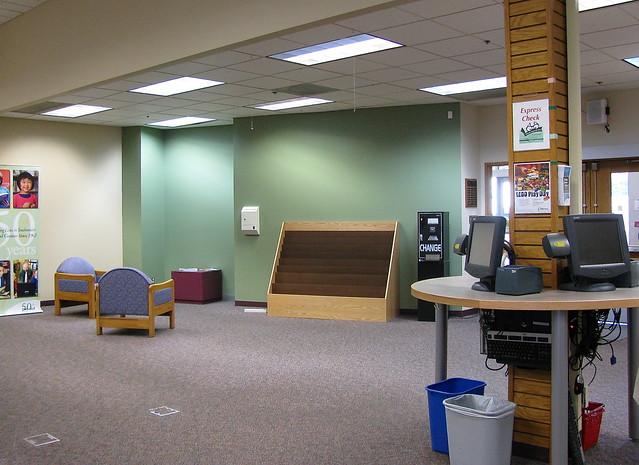
It's be three years since the remodel (really?!!), and now I often see people working together on computers and we hold many of our "Book A Librarian" sessions in this space. I'll have to take a photo tomorrow to show what it looks like - it's kind of funny to see it in this state before the furniture was added. This may not be the source of any groundbreaking developments, but we do provide a space for people to learn and work together. Two of our other branches were remodeled into Creative Tech Centers, which provide an array of equipment and programming focused around technology.
Question two - not much, yet. I cannot think of anything my library system has done to really encourage any sort of "legacy" by the people we offer technology training to. In fact, I think it's been quite the opposite. We offer generic classes teaching basic computing skills, and a few people come but overall attendance is slim. What's lacking? CONTEXT and PURPOSE. A generic class to learn how to use Word is nice, but boring. The learners need a reason to learn that will carry on after the class occurs. Our Book A Librarian appointments are popular because people have specific learning goal in mind, and they receive personalized help. This still does not encourage a legacy, however.
Question three - for my coworkers, our purpose is to help the people that walk in the door. Therefore we need to have a level of digital literacy that enables us to provide high quality service. Until now, this has meant the ability to help people download eBooks to their devices, or showing them how to access their flash drive or print from the public computers. Obviously the potential for so much more exists. In the next few months, my work will consist of expanding digital literacy skills for my coworkers, who can in turn open doors for our customers.
This course has given me so much to think about. Everyone needs meaning for their learning.
